Why Sourdough Is Different: What Slow Fermentation Actually Changes in Your Bread
10 June 2026 · By Sourdough.mu · Updated 5 July 2026
Walk down any supermarket bread aisle in Mauritius and most of what you see was mixed, proofed and baked within a few hours, often with a long list of additives to make that speed possible. Sourdough sits at the other end of the spectrum. It is bread made slowly, with a living culture instead of a sachet of commercial yeast, and that single difference sets off a chain of changes in the dough that you can taste, feel and, many people find, digest more comfortably.
Two ingredients do the work: wild yeast and bacteria
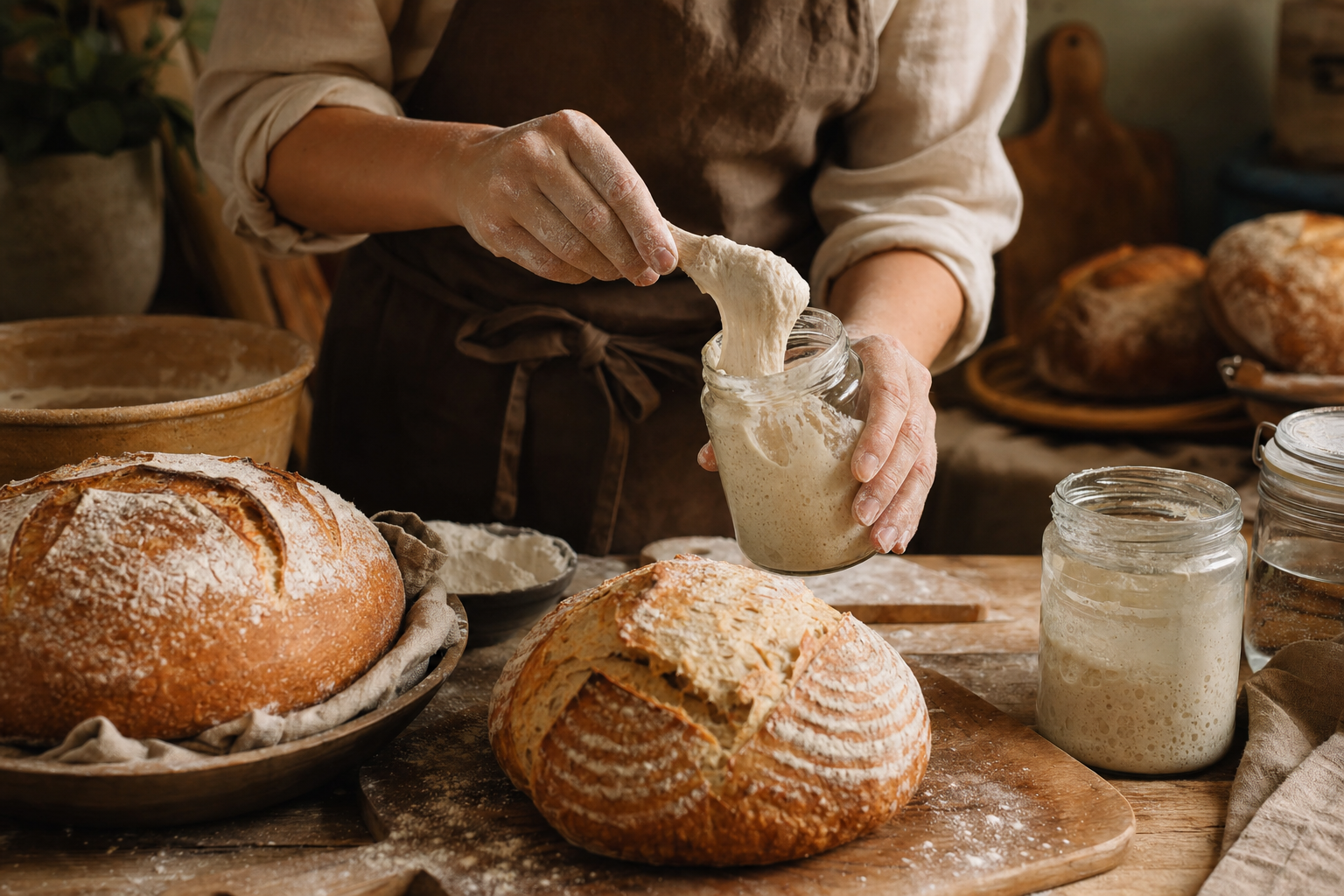
A sourdough starter is a small pot of flour and water that has been colonised by wild yeasts and lactic acid bacteria. The yeasts produce carbon dioxide, which raises the dough. The bacteria produce lactic and acetic acids, which is where the gentle tang comes from. Commercial baker's yeast gives you only the first half of that partnership. It raises bread quickly and reliably, but it does not acidify the dough, and the acidity is where most of sourdough's interesting properties begin.
Because the culture is slower and more varied than a single strain of packaged yeast, sourdough fermentation typically runs for many hours rather than one or two. Time is not a side effect here. Time is the ingredient.
Fermentation is a form of pre-digestion
During a long ferment, enzymes and microbes get to work on the flour before you ever eat it:
- Complex starches are partly broken down, which is one reason well fermented sourdough tends to feel less heavy in the stomach.
- Gluten proteins are partially degraded. Sourdough is not gluten free, but many people report that they tolerate it more easily than fast industrial bread.
- Phytic acid, a compound in wheat bran that binds minerals like iron and zinc, is substantially reduced by the acidic environment, so more of those minerals become available to you.
None of this makes sourdough a medicine. It makes it a food that has already done some of the work your gut would otherwise have to do.
Acidity changes how your body handles the bread
The organic acids in sourdough do more than flavour it. Acidified bread is generally digested more gradually than soft white bread, which means a gentler, steadier release of energy rather than a rapid spike and slump. People who find that a white bread sandwich leaves them hungry again by mid morning often notice that a dense slice of sourdough holds them for longer. The exact effect varies from person to person and loaf to loaf, but the general direction is well established: slower fermentation tends to mean slower digestion.
The same acids also act as natural preservatives. A proper sourdough loaf resists mould for days at room temperature without any added preservatives, which matters in a warm, humid climate like ours where soft supermarket bread can turn surprisingly fast once opened.
Flavour you cannot fake
Industrial baking tries to imitate sourdough with vinegar, flavourings or dried sourdough powder, and the results always fall flat. Real fermentation produces hundreds of aromatic compounds that develop together over hours. That is why genuine sourdough tastes layered: wheat, cream, a hint of acidity, sometimes a nutty or almost cheesy depth in the crust. It is also why the flavour keeps changing as the loaf ages. Day two toast from a real loaf is arguably better than day one.
What sourdough is not
It is worth being honest about the limits. Sourdough is still bread. It contains gluten, it contains carbohydrates, and eating half a loaf because it is artisanal is still eating half a loaf. It is not a treatment for coeliac disease, and anyone with a diagnosed condition should follow medical advice, not bakery folklore.
What sourdough offers is a better version of a staple food: fewer additives, better mineral availability, gentler digestion for many people, longer keeping quality and far more flavour.
How to spot the real thing
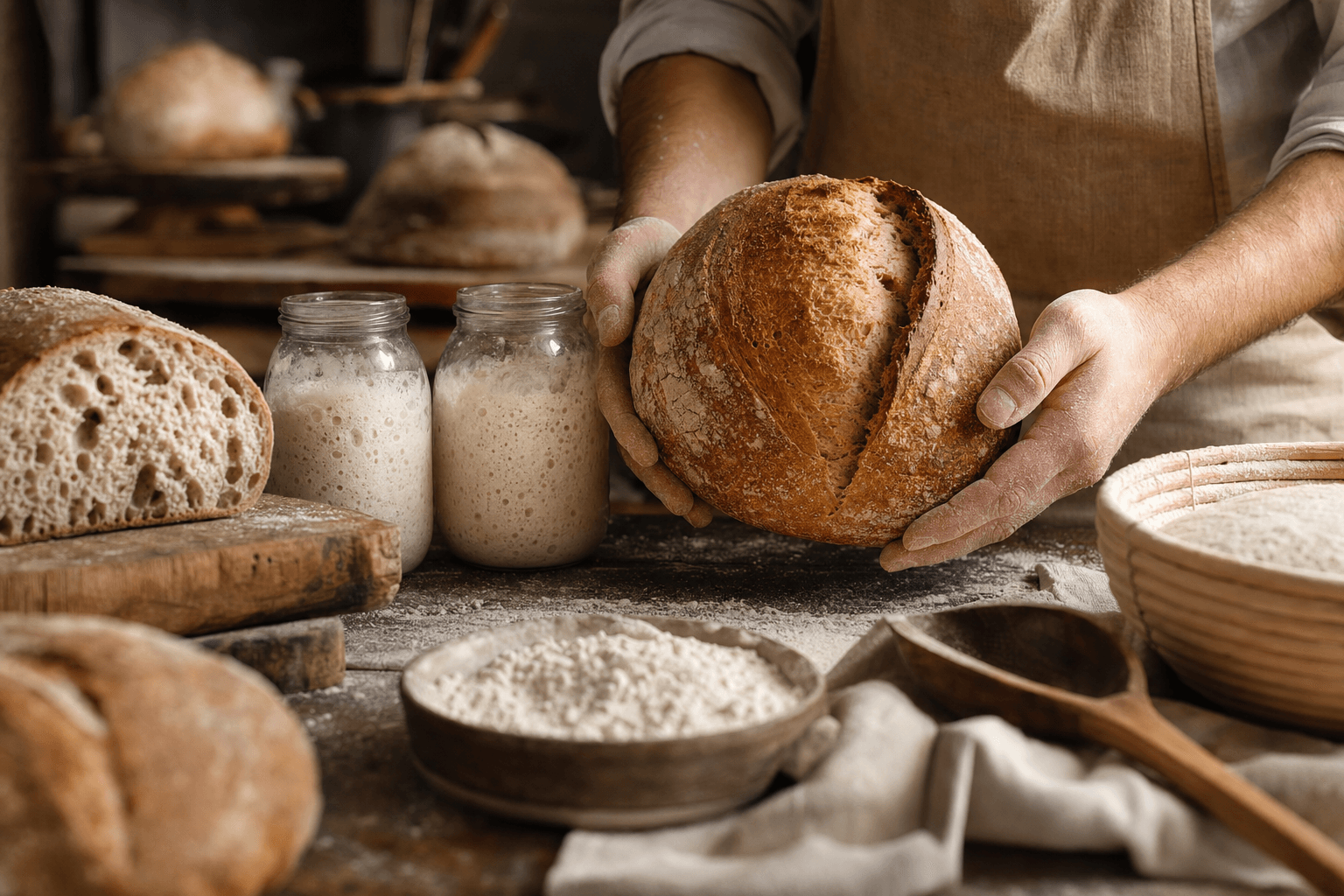
In Mauritius, the word sourdough is starting to appear on labels that do not deserve it. A few quick checks help. Real sourdough has a short ingredient list: flour, water, salt, and perhaps the word levain or starter. If you see yeast high on the list alongside dough conditioners and emulsifiers, it is a fast loaf wearing a slow loaf's name. The crumb of real sourdough is slightly glossy and irregular, the crust is firm, and the aroma is noticeably tangy when you cut it.
Better still, bake your own. A starter costs nothing but flour and patience, and the rest of the guides here on Sourdough.mu will walk you through it step by step.
Fermentation turns simple flour and water into food your gut understands. Explore the wider Healthspan health ecosystem.