Keeping a Sourdough Starter Alive in Mauritius Humidity: A Tropical Climate Guide
11 June 2026 · By Sourdough.mu · Updated 5 July 2026
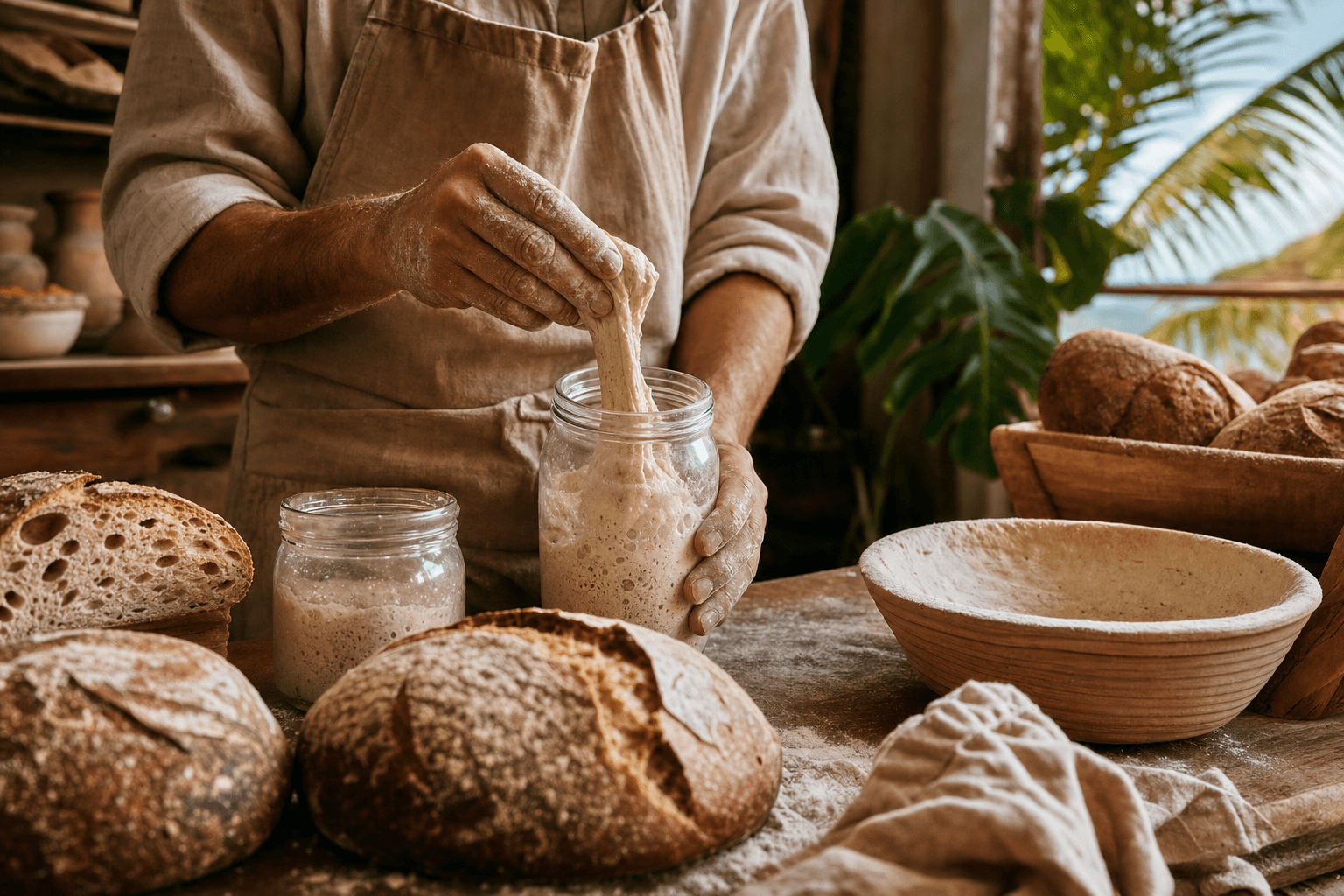
Most sourdough advice online is written for kitchens in Europe or North America, where the challenge is keeping a starter warm enough. In Mauritius we have the opposite problem. For much of the year, kitchen temperatures sit between 25 and 32 degrees with humidity to match, and a starter in those conditions behaves like it has had three espressos. It is not harder to keep a starter here. It is different, and once you adjust your routine to the climate, a tropical kitchen is actually one of the easiest places in the world to ferment.
Starting from scratch: the first week
You need flour, water and a clean jar. Nothing else.
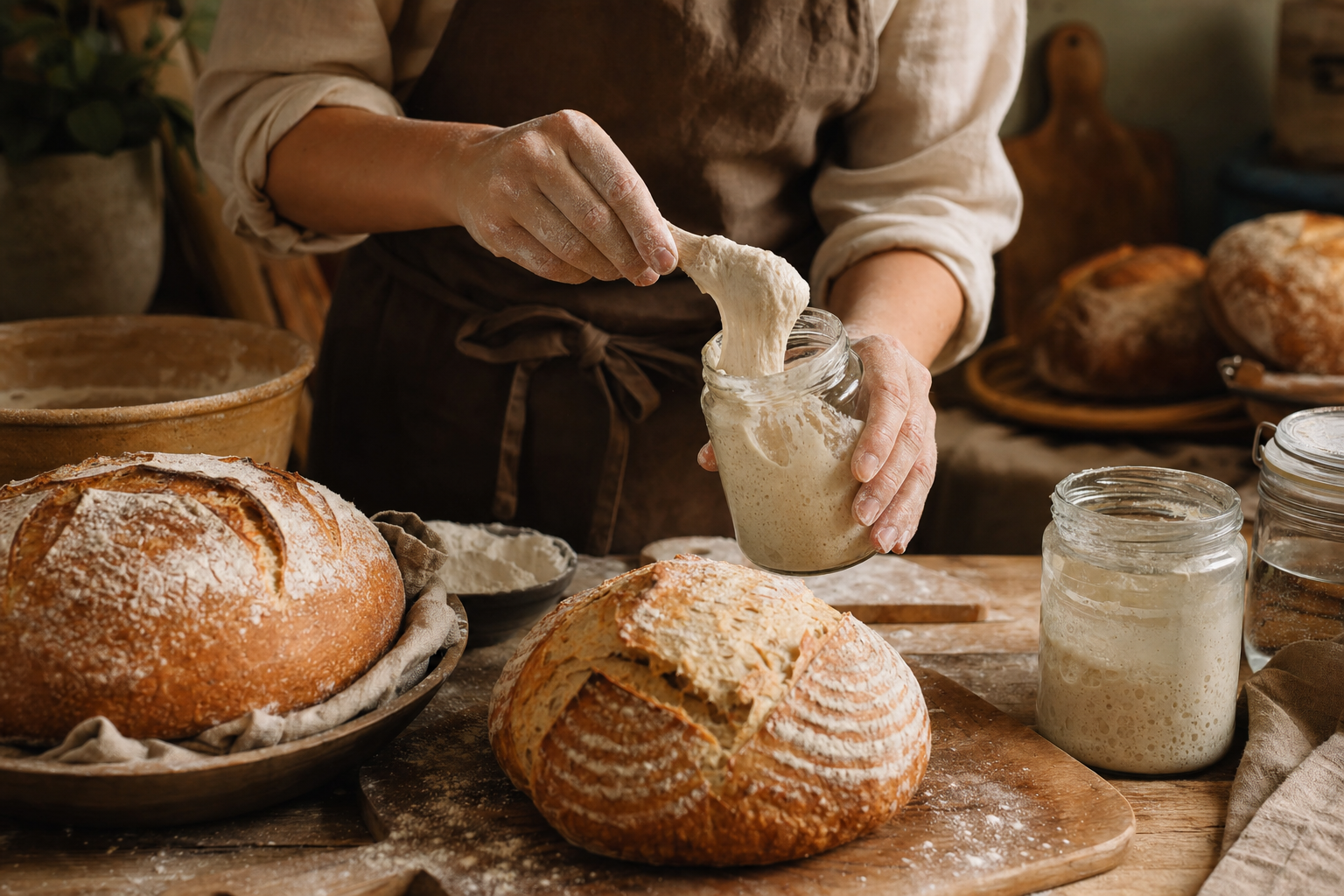
- Day 1: mix 50 g of flour with 50 g of water in the jar, stir well, cover loosely and leave it on the counter. Wholemeal or a mix of wholemeal and white flour works fastest because the bran carries more wild microbes.
- Days 2 to 4: once a day, discard about half and feed with 50 g of flour and 50 g of water. You may see vigorous bubbling as early as day 2. In our heat, that first burst is often bacteria that will later fade, so do not celebrate or panic yet.
- Days 5 to 7: the culture stabilises. A healthy tropical starter will often double within 3 to 5 hours of feeding and smell pleasantly sour, like yoghurt or green apple.
In cooler climates this process takes 10 to 14 days. Here it frequently settles in under a week.
Heat is an accelerator, so feed accordingly
The single biggest adjustment for Mauritius is feeding ratio. A standard 1:1:1 feed (equal parts starter, flour and water) can peak and collapse in a few hours at 30 degrees, leaving you with a sluggish, over acidic soup by evening. Two fixes work well:
- Feed at higher ratios, such as 1:5:5 or even 1:10:10. Less starter relative to fresh flour means more food to work through and a slower, more controlled rise.
- Use cooler water. Water straight from a filter jug in the fridge buys you an hour or two.
Watch the starter, not the clock. It is ready to use when it has roughly doubled, is full of bubbles and smells tangy but not harsh. Past its peak it deflates slightly and starts smelling like nail polish remover, a sign the acids are taking over.
The fridge is your best friend
Unless you bake daily, keep your starter in the refrigerator. A fridge starter needs feeding only once a week or so. The routine is simple: take it out, let it warm up for an hour, discard most of it, feed it, let it get bubbly on the counter, then return it to the cold. When you want to bake, give it one or two feeds at room temperature first and it will be back to full strength. During cyclone season power cuts, a well established starter will shrug off a day or two without refrigeration; just feed it when things settle.
Humidity, mould and keeping things clean
High humidity encourages surface mould on anything left exposed, so a few habits matter more here than elsewhere. Keep the inside walls of the jar reasonably clean, scraping down smears of starter that would otherwise dry and grow fuzz. Cover the jar loosely with a lid or cloth rather than leaving it open. If you ever see pink or orange streaks, or true fuzzy mould, throw the batch away and start again; it costs a cup of flour, not a fortune. Grey liquid on top, sometimes called hooch, is harmless and just means the starter is hungry. Stir it in or pour it off and feed.
Local flour and water questions
Ordinary local supermarket flour works fine. You do not need imported organic flour to get started, though a spoonful of wholemeal at each feed keeps the culture lively. Tap water in most of Mauritius is fine for starters; if yours is heavily chlorinated, let it stand for a few hours or use filtered water.
A realistic tropical routine
Here is a schedule that suits most home bakers on the island. Keep the starter in the fridge all week. On Friday evening, feed it and leave it out overnight. On Saturday morning it is active and ready, so mix your dough, and thanks to the warm kitchen your bulk fermentation will be short. Feed the starter once more and return it to the fridge. One weekly cycle, fresh bread every weekend, almost no waste. The climate you thought was a problem turns out to be a shortcut.
Fermentation turns simple flour and water into food your gut understands. Explore the wider Healthspan health ecosystem.