Gut Health and Fermented Foods: Where Sourdough Fits on Your Plate
12 June 2026 · By Sourdough.mu · Updated 5 July 2026
The trillions of microbes living in your digestive tract are not passengers. They help digest food, produce vitamins, train the immune system and influence everything from energy levels to mood. Feeding them well is one of the most useful things you can do for your health, and fermented foods, sourdough included, have a real role to play. But the story is more nuanced than the marketing suggests, so it is worth understanding what each food actually delivers.
What your microbiome actually wants
Strip away the jargon and gut bacteria have simple needs. They want fibre, because fibre is their food. They want variety, because different plants feed different species. And they want you to go easy on the things that squeeze them out: heavily processed foods, excess sugar and a diet built around the same three refined staples every day.
Mauritius has quietly drifted toward the second pattern. Rates of diabetes and other lifestyle related conditions here are among the concerns doctors raise most often, and diets heavy in white bread, white rice and sweetened drinks are part of that picture. Rebalancing toward fibre rich, minimally processed food is not a fad. It is basic maintenance.
Live ferments versus transformed ferments
Fermented foods fall into two broad camps, and the distinction matters.
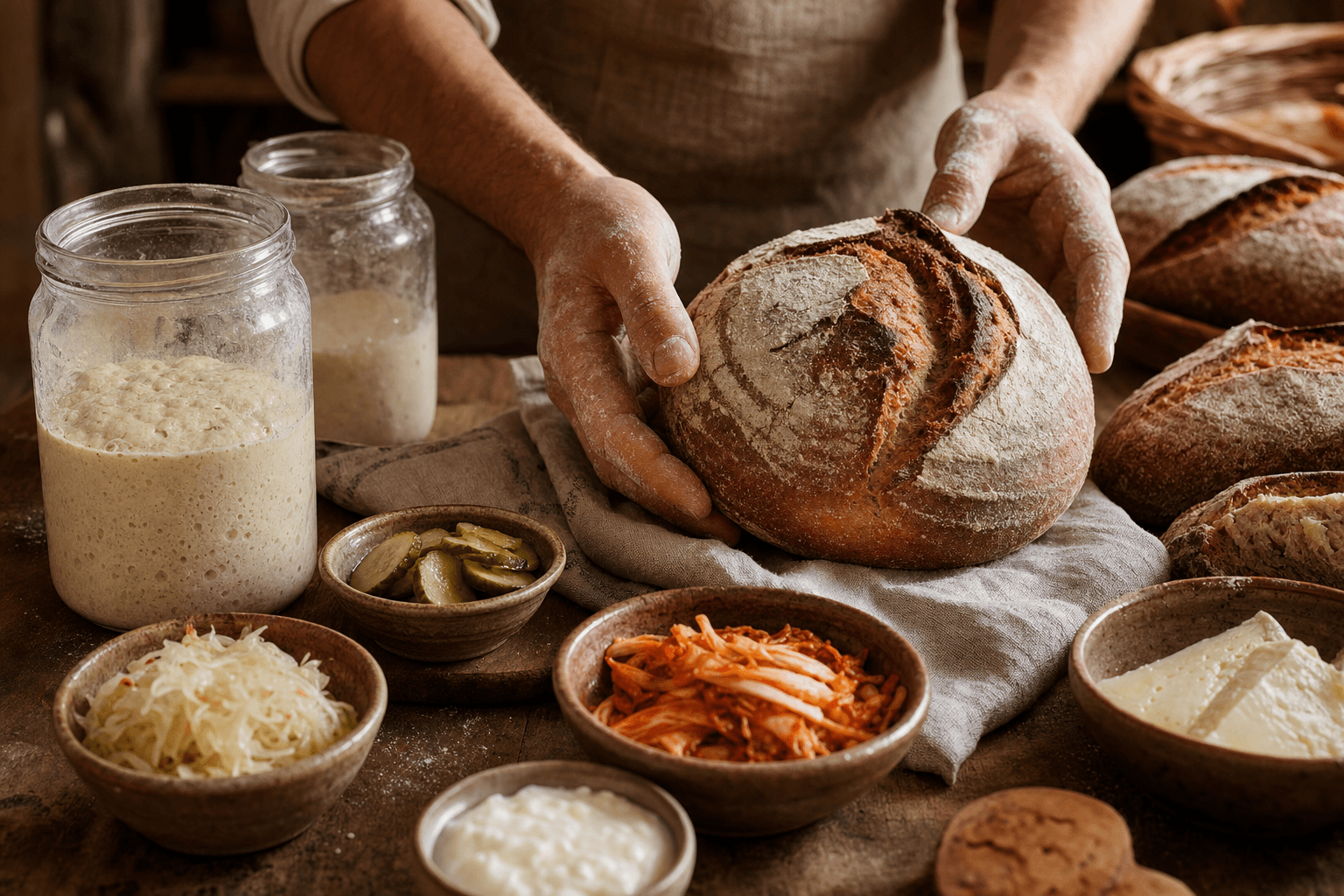
- Live ferments are eaten with their microbes still active: yoghurt, kefir, unpasteurised achards and pickles, kombucha, some aged cheeses. These can deliver live bacteria directly to your gut.
- Transformed ferments are fermented during production but the microbes do not survive to your plate. Sourdough bread belongs here, because baking kills the culture. So do coffee and chocolate, both fermented before roasting.
Sourdough is therefore not a probiotic. What you get instead is everything the fermentation did to the food before the oven: reduced phytic acid so minerals absorb better, partly broken down starches and proteins, organic acids that slow digestion, and in wholegrain versions a solid dose of the fibre your gut bacteria actually eat. Think of it as prepared fuel rather than a delivery van for bacteria.
Why gentler digestion matters
Many people who feel bloated after ordinary bread find sourdough easier going. One likely reason is that long fermentation reduces certain fermentable carbohydrates in wheat that can cause gas and discomfort in sensitive guts. The microbes eat them during proofing so your gut does not have to deal with them later. This is not universal, and anyone with a diagnosed digestive condition should be guided by a doctor or dietitian, but as everyday experience goes it is one of the most commonly reported benefits of switching to real bread.
Slower digestion also means steadier blood sugar for many people, which is relevant on an island where so many families live with diabetes. Sourdough is not a free pass, but as breads go, a dense wholegrain sourdough is a far better companion to a balanced plate than a fluffy white loaf.
Building a fermented plate in Mauritius
The good news is that fermentation is already part of local food culture, sometimes without the label. A practical week might include:
- Plain yoghurt or lassi style drinks, widely available and inexpensive.
- Homemade vegetable achards left to mature, or other naturally soured pickles.
- Sourdough bread instead of sliced white, especially wholegrain versions.
- Occasional extras if you enjoy them: kefir, kombucha, miso in soups.
No single item does the job alone. The pattern is what counts: several fermented foods, plenty of vegetables and pulses, and fewer ultra processed products crowding them out.
Keep your expectations honest
Gut health has attracted a wave of exaggerated claims, and it is fair to be skeptical. Fermented foods will not cure diseases, melt fat or transform your personality. What a sensible body of evidence supports is more modest and more useful: diets rich in fibre and fermented foods are associated with a healthier, more diverse microbiome, and a healthier microbiome supports good digestion and general wellbeing.
Sourdough earns its place in that pattern not as a magic bullet but as a genuinely better staple. Every sandwich is a small vote for one kind of food system or another. Choosing bread made from flour, water, salt and time, rather than a paragraph of additives, is an easy vote to cast, and your gut gets to count the ballots three times a day.
Fermentation turns simple flour and water into food your gut understands. Explore the wider Healthspan health ecosystem.