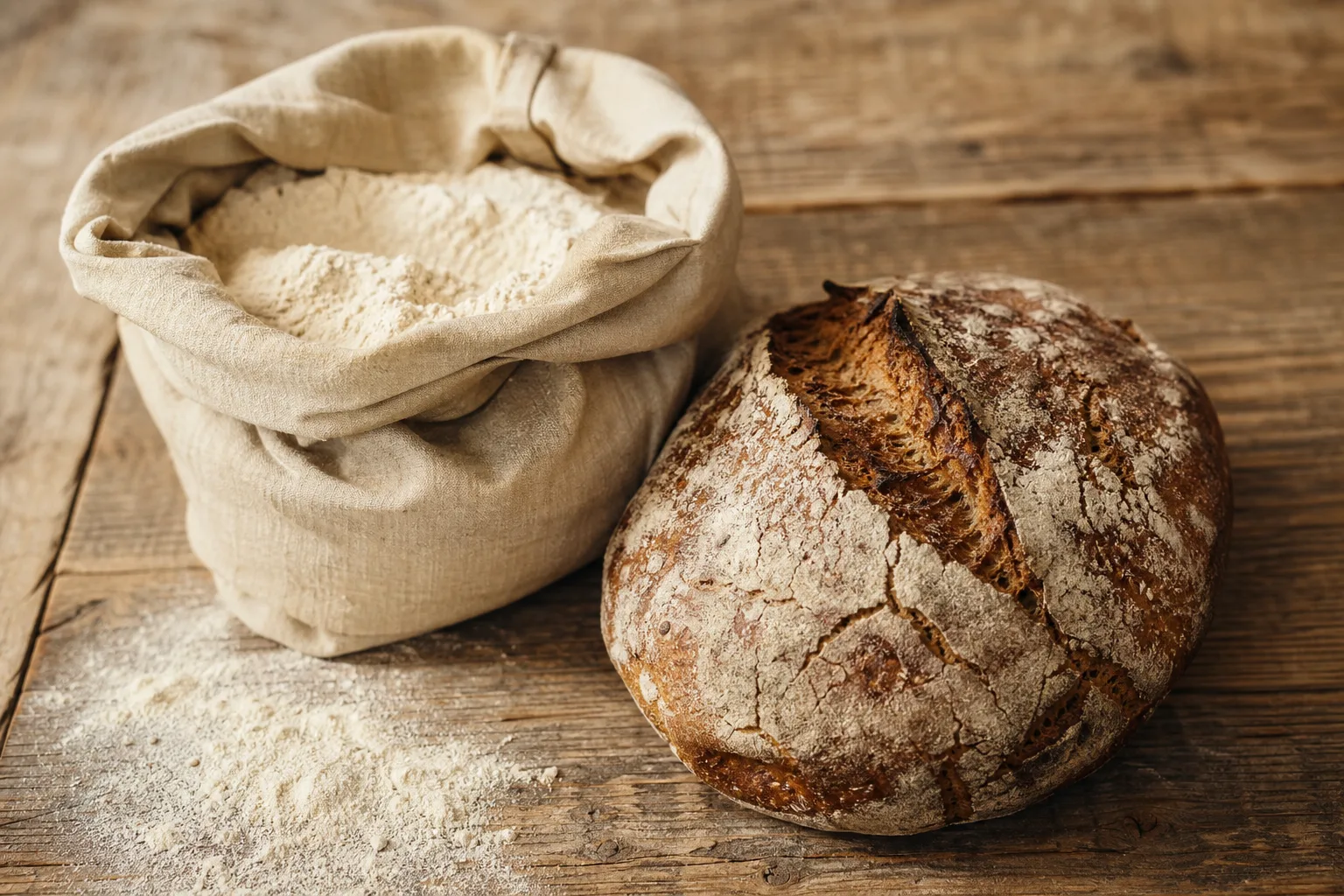
Gluten and Sourdough: What Long Fermentation Does and Does Not Change
13 June 2026 · By Sourdough.mu · Updated 5 July 2026
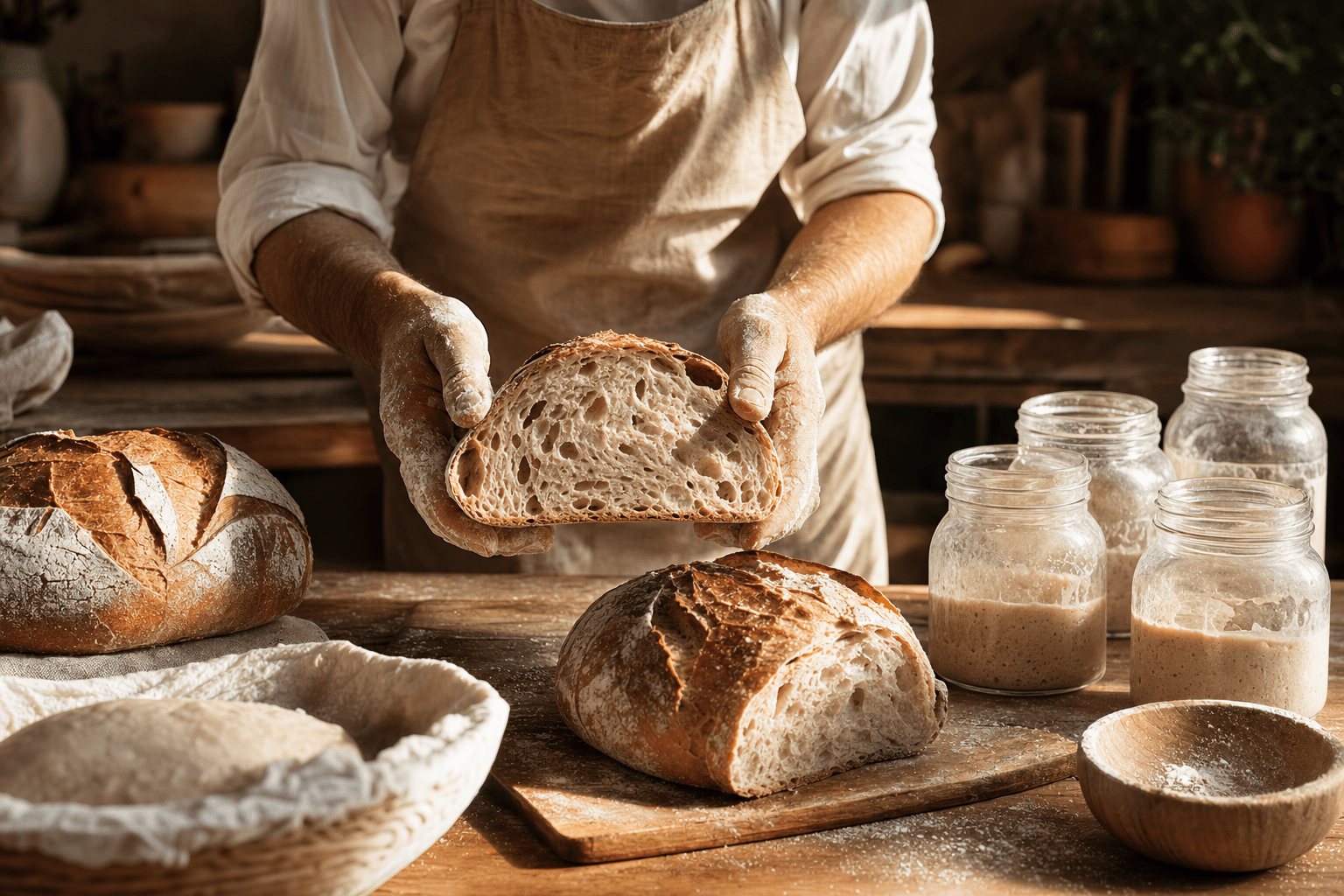
Ask around and you will meet people who swear that bread bloats them, yet a slice of proper sourdough causes no trouble at all. You will also find headlines claiming sourdough is safe for anyone who reacts to gluten, which is dangerously wrong. The truth sits in between, and it is worth laying out carefully, because the difference between discomfort and a medical condition is not a detail.
What gluten actually is
Gluten is not an additive. It is the network of proteins, mainly glutenin and gliadin, that forms when wheat flour meets water. That stretchy network is what traps gas and gives bread its structure; without it you get a brick. Gluten is in wheat, and in related grains like barley and rye, whether the bread is industrial or artisanal. Any wheat sourdough contains gluten. That sentence is not negotiable.
What fermentation does to gluten
During a long sourdough ferment, two things chip away at those proteins. The acids produced by lactic bacteria create conditions in which protein degrading enzymes, both from the flour itself and from the microbes, work more effectively. Over many hours the gluten network is partially broken down into smaller fragments. This is real chemistry, not marketing. It is part of why aged sourdough is more extensible and why very long fermented doughs can become slack and hard to shape.
But partial is the key word. Fermentation reduces and modifies gluten; it does not eliminate it. A finished sourdough loaf still contains far more gluten than the strict threshold used to define gluten free food. Some experimental work has explored fully degrading gluten with specially selected cultures under laboratory conditions, but that is nothing like what happens in a bakery or a home kitchen.
Coeliac disease: the hard line
Coeliac disease is an autoimmune condition in which even small amounts of gluten trigger an immune response that damages the lining of the small intestine. For someone with coeliac disease, sourdough made from wheat, rye or barley is not safer, not gentler, not fine in small amounts. It is off the menu, full stop. The same applies to diagnosed wheat allergy. If you suspect either condition, the right move is to see a doctor and get tested before changing your diet, because testing is unreliable once you have already cut gluten out. Mauritius has decent access to GPs and laboratories, so this is a solvable step, not an obstacle.
So why do some people tolerate sourdough better?
Outside of coeliac disease and allergy, there is a large group of people who simply feel worse after ordinary bread: bloating, heaviness, wind. For many of them sourdough genuinely does sit better, and there are credible reasons why.
- Long fermentation consumes much of the fructans in wheat, a type of fermentable carbohydrate that is a common culprit behind bloating in sensitive people. Many who blame gluten may actually be reacting to fructans, which sourdough sharply reduces.
- Partially degraded proteins and starches give the gut an easier starting point.
- Real sourdough lacks the emulsifiers, added gluten and dough conditioners found in industrial bread, any of which may bother some individuals.
In other words, the loaf that troubles people is often the fast, additive heavy loaf, and the improvement they feel with sourdough is about everything fermentation changes, not about gluten disappearing.
Practical guidance you can act on
A few honest rules of thumb:
- Diagnosed coeliac or wheat allergic: no wheat sourdough, ever. Look into naturally gluten free ferments instead; sourdough style baking with rice, sorghum or buckwheat is a real craft of its own.
- Suspected but undiagnosed problems with bread: get tested first, then experiment.
- No diagnosis, just discomfort with supermarket bread: a well fermented sourdough, ideally one proofed overnight or longer, is worth a genuine trial. Start with a modest amount and see how you feel over a week or two.
The bottom line
Sourdough does not remove gluten, and anyone who tells you otherwise is selling something. What it offers is a bread in which time and microbes have already softened the hardest work of digestion, stripped out common bloating triggers and skipped the additives entirely. For the many people whose issue was never truly gluten, that can be the difference between avoiding bread and enjoying it again. For the few whose issue really is gluten, no amount of fermentation changes the answer, and knowing which group you belong to is worth a visit to the doctor.
Fermentation turns simple flour and water into food your gut understands. Explore the wider Healthspan health ecosystem.