Baking Sourdough with Organic Flour in Mauritius: A Practical Guide
10 July 2026 · By Sourdough.mu
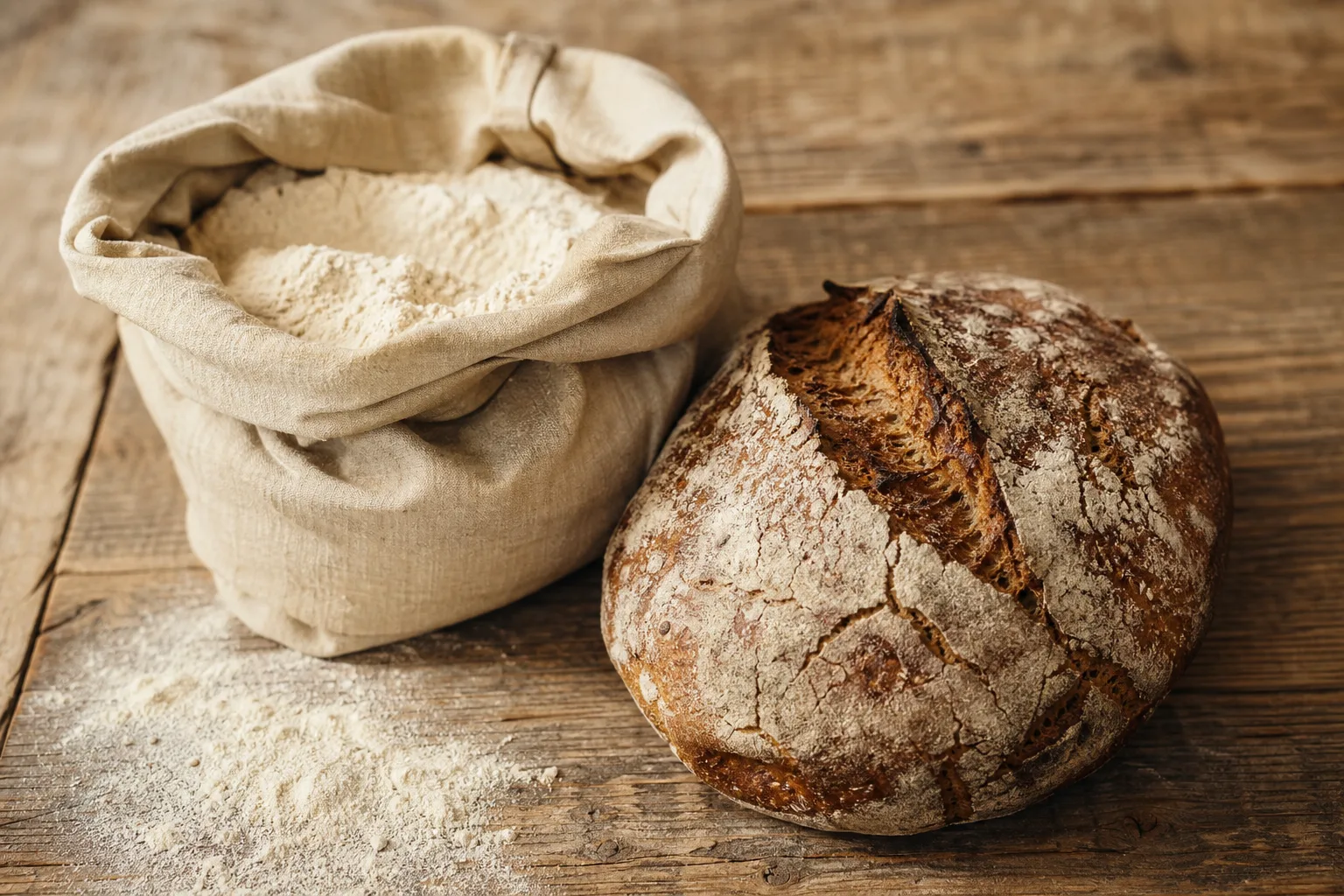
Every sourdough baker in Mauritius eventually runs into the same wall. The starter is bubbly, the timings are dialled in, the shaping is tidy, and yet the loaf comes out a little flat, a little pale, a little dull in flavour. In most cases the problem is not technique. It is the flour.
Sourdough is a three ingredient food. Flour, water and salt, transformed by wild yeast and lactic acid bacteria. There is nowhere for a weak ingredient to hide, and since flour makes up the bulk of the recipe, the bag you open decides most of what happens over the next twenty four hours.
Why flour quality decides the loaf
A sourdough starter is a living culture, and flour is its entire diet. The yeast and bacteria feed on the starches, sugars and minerals in the grain, so the vigour of your fermentation, the flavour of the crumb and the colour of the crust all trace back to what the mill left in the bag.
Three things matter most. Protein quality determines how strong and extensible the gluten network will be, which is what holds the gas your culture produces. Enzyme activity, especially amylase, controls how readily starch is converted into the sugars that feed fermentation and brown the crust. And mineral content feeds the microbes themselves, which is why bakers commonly report that wholegrain and high extraction flours produce noticeably livelier starters than refined white flour.
Most supermarket flour is optimised for shelf life and consistency, not for fermentation. It is heavily refined, which strips out the bran and germ where most of the minerals and enzymes live. It works, but it tends to give a slow culture and a polite, one dimensional loaf.
What organic stoneground flour actually changes
Organic and stoneground describe two different things, and for sourdough both matter.
Stone milling crushes the whole grain slowly between stones, at lower temperatures than industrial roller milling, and it is much harder to strip out the bran and germ completely. The practical result is flour with a higher ash content. Ash is the miller's measure of mineral content: burn a sample of flour and weigh what remains. French flours wear this number openly, T65 for everyday white, T80 for the pale beige "bise" flour many artisan bakers love, then T110 and T150 as you move towards wholegrain. Higher ash means more minerals, livelier and more aromatic fermentation, a creamier crumb colour and deeper flavour.
Gentler milling also tends to preserve more of the grain's native enzymes and the delicate oils in the germ. A flour with healthy amylase activity gives your starter easier access to food, which many bakers notice as a steadier rise and better crust colour.
Certification is the other half of the story. Certified organic grain is grown without synthetic pesticides or fungicides, and organic standards also rule out the synthetic post-harvest treatments sometimes applied to conventional grain in storage. For a food that depends on a living microbial culture, starting from grain handled this way simply makes sense, and many sourdough bakers report their starters settle into a steadier rhythm on organic flour. If you want to know what actually stands behind the logos on a bag, this plain language guide to organic certifications explains how the main European labels are audited and what they guarantee.
Ancient grains worth knowing: spelt and einkorn
Once your basic loaf is consistent, ancient wheats are the most rewarding next step. They bring flavours modern bread wheat has lost, and they behave differently enough to teach you real dough sense.
Spelt is the friendly one. It has plenty of gluten, but that gluten is more extensible and less elastic than modern wheat, so spelt doughs feel silky, spread if overproofed, and reward gentle handling with slightly less water. The flavour is warm and nutty, and even 20 to 30 percent spelt in a white dough is transformative.
Einkorn is the ancient one, among the oldest cultivated wheats we know. Its gluten is weak and its dough is famously sticky, so it is best blended rather than used alone, and it repays a shorter bulk fermentation. In return you get a golden crumb and a rich, almost sweet graininess. Bakers who love it really love it.
Sourcing these grains used to be the hard part in Mauritius. The reference producer for many organic bakers is Moulin des Moines, an Alsatian mill that has specialised in organic and ancient grains for decades, milling spelt, einkorn and rye alongside classic French wheat flours, and its range is now reaching the island.
A note on health, because ancient grains attract big claims. Research suggests that long sourdough fermentation breaks down some of the compounds that make bread hard work for sensitive stomachs, and some people report digesting spelt or einkorn more comfortably than modern wheat. These are encouraging signals, not guarantees, and none of it applies to coeliac disease: spelt and einkorn are wheat and contain gluten. This is general information, not medical advice, so if bread gives you real symptoms, speak to a health professional.
Baking organic flour in the Mauritian climate
Tropical heat and humidity change sourdough more than any recipe written for a European kitchen admits. Add a livelier, higher ash flour and everything speeds up again. A few adjustments cover most of it:
- Watch the dough, not the clock. At 28 to 30 degrees, a bulk fermentation that takes five hours in a cool European kitchen can be done in half the time.
- Hold back a little water at first. Wholegrain and high extraction flours absorb more, but humid air means your flour already carries moisture, so add water gradually.
- Use the fridge. An overnight cold retard slows fermentation to a manageable pace and deepens flavour.
- Store flour airtight, and keep wholegrain and einkorn flours in the fridge or freezer. The germ oils that make stoneground flour flavourful also go rancid faster in heat.
- Feed your starter a portion of the same organic flour you bake with, so the culture is already adapted on bake day.
Where to buy organic flour in Mauritius
This has long been the frustrating part: small health shops, patchy imports and stock that vanished for months at a time. That picture is changing. Naturespan, a new certified organic grocery destination, opens stores in Grand Baie and Tamarin on September 1 2026, with a food truck already on the road around the island, and its organic bakery range is built around exactly the flours discussed here, from stoneground French wheat to spelt, einkorn and rye.
Wherever you buy, apply the same checks. Look for a recognised organic logo on the bag, a T number or extraction rate so you know what you are working with, a milling date as recent as you can find, and packaging that has clearly been kept cool and dry.
Bringing it together
A good first formula for organic flour on the island: 80 percent stoneground white (T65 or T80), 20 percent spelt or wholegrain, around 70 percent water added gradually, 2 percent salt, then a shorter, closely watched bulk fermentation and an overnight retard in the fridge. It is a modest change on paper. Out of the oven, with a crust that finally sings and a crumb that tastes of the grain itself, it will not feel modest at all.
Real bread starts with real flour. In Mauritius, for the first time, that is becoming an easy thing to buy.
Fermentation turns simple flour and water into food your gut understands. Explore the wider Healthspan health ecosystem.